RESCUES & NEW ARRIVALS
RESCUES OF 2026
THE ABANDONED FOALS – 2026
February 2026
WATCH THEIR RESCUE/ARRIVAL FOOTAGE HERE
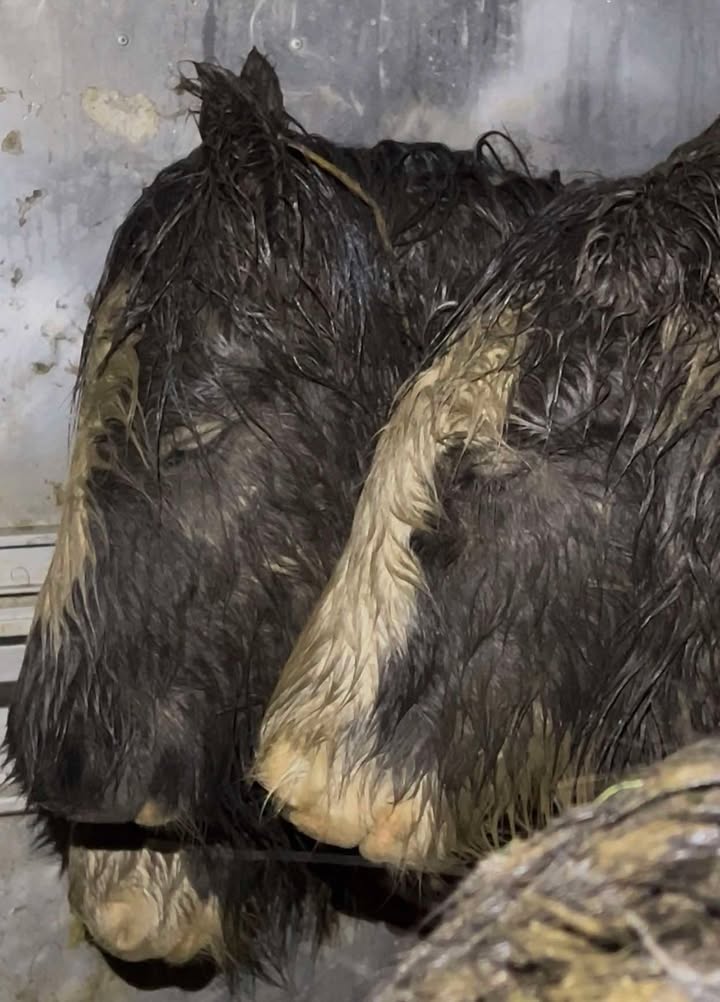
These four baby colts are the survivors of an utterly devastating situation.
They were forcibly separated from their mothers and dumped on land with no care, no shelter and no plan, left to fend for themselves. During this ordeal, one foal tragically lost his life, becoming stuck fast in deep mud before help could reach him.
While we were legally required to wait for the abandonment notice period to end, working alongside the landowner, members of the public stepped in and did everything they could to ensure the remaining foals survived. Without their vigilance and compassion, there is no doubt the outcome could have been very different.
Once the notice period ended, the boys were carefully penned, allowing us to load them safely onto our transport.
Little did they know, that long journey home was the very beginning of their new lives.
In honour of those efforts, and of what these babies endured, we have named the boys.
Please welcome Ash, Danny, Chris… and the remaining foal who was left unnamed, whose absolutely gut-wrenching blue eyes stayed with us from the very first moment, we named him Blue 🤍
On arrival at Woodfield Animal Sanctuary, it took approximately 30 to 40 minutes for the foals to unload. We didn’t want to push them and allowed them the time they needed to come off in their own time.
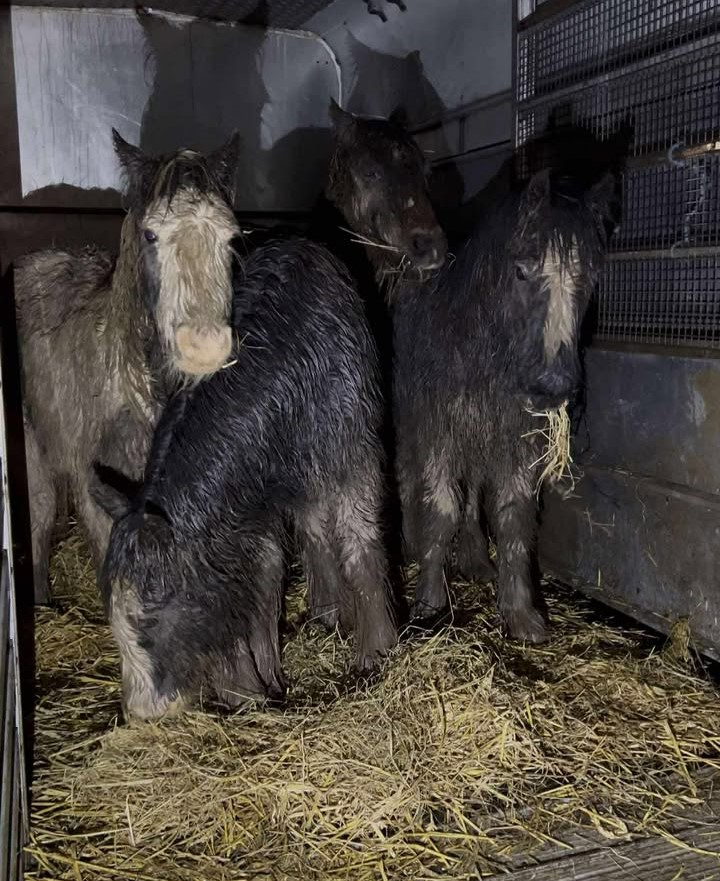
It was clear to see in their arrival video just how exhausted, wet, cold and hungry they all were.
Once settled, they were tucked into big warm beds with plenty of haylage to munch on. After everything they had been through, it was a relief to see them rest well through their first night.
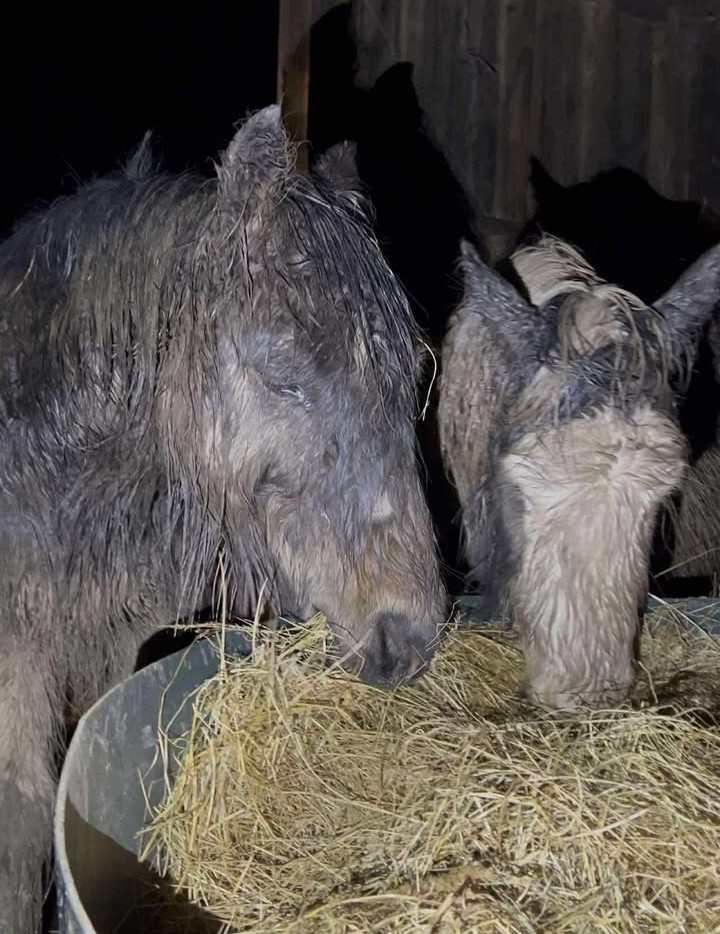
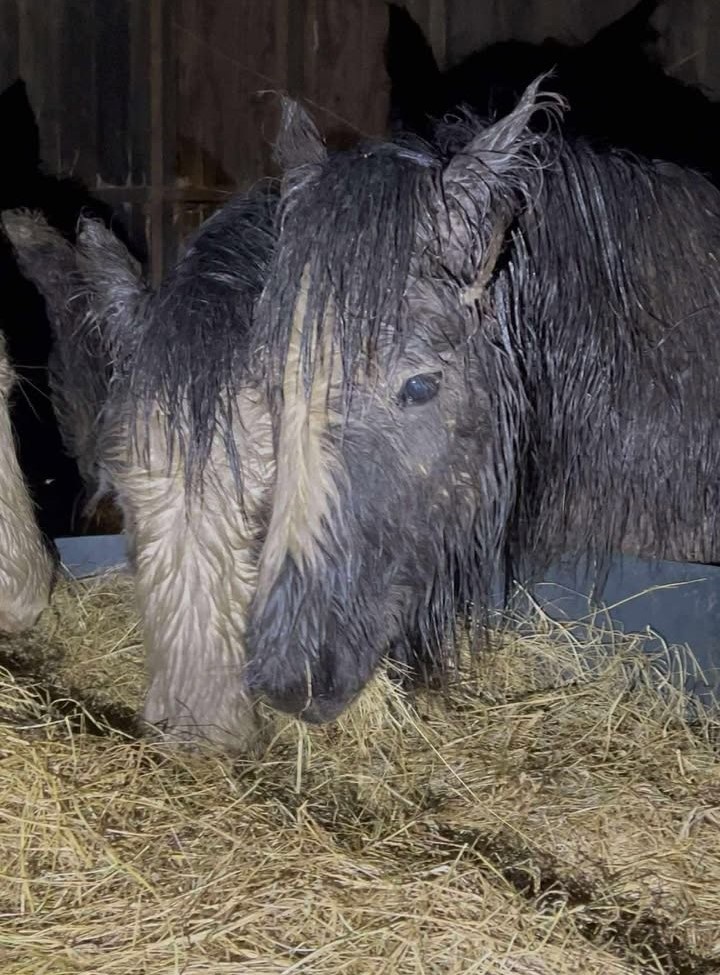
But the next morning, the reality of their ordeal became clear.
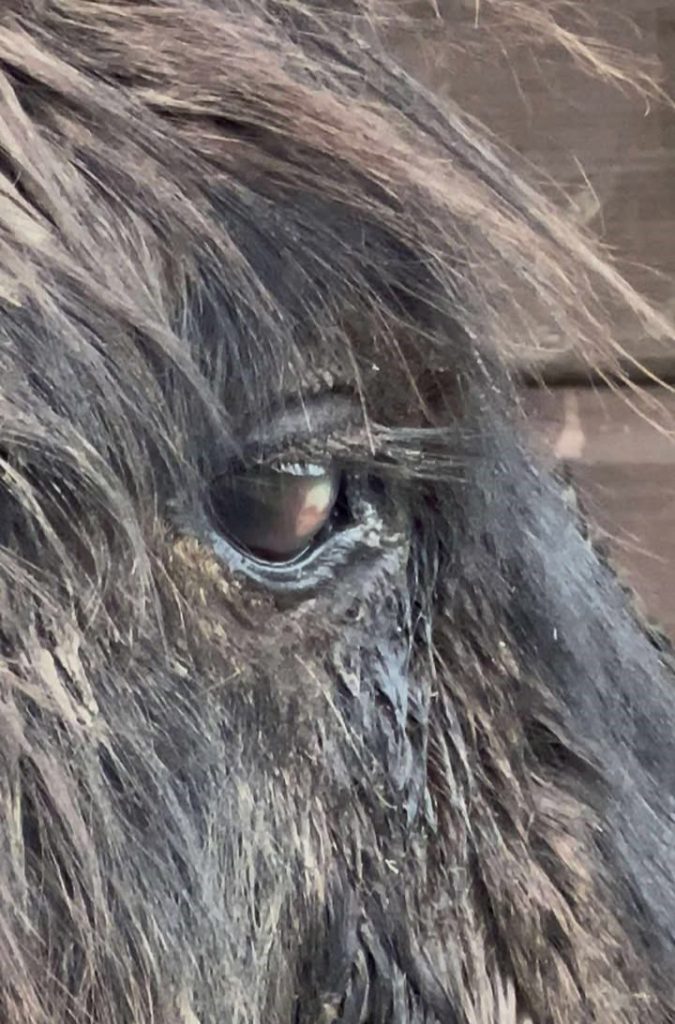
One foal, Ash, has a severe and long standing eye injury that had received no previous treatment. From the moment we first saw it, we were deeply concerned he may lose the eye.
Our vet attended and sadly agreed. At present, it is leaning towards eye removal surgery. However, if there is any chance the eye can be saved, we will pursue that option with everything we have. No expense spared.
Ash and his little friend Blue were loaded up and taken straight to the veterinary clinic for further examinations. Ash has since had an injection directly into his eye, and we are hoping desperately for some form of reaction that would allow treatment to continue. At this moment in time though, it is still looking more likely that his eye will need to be removed.
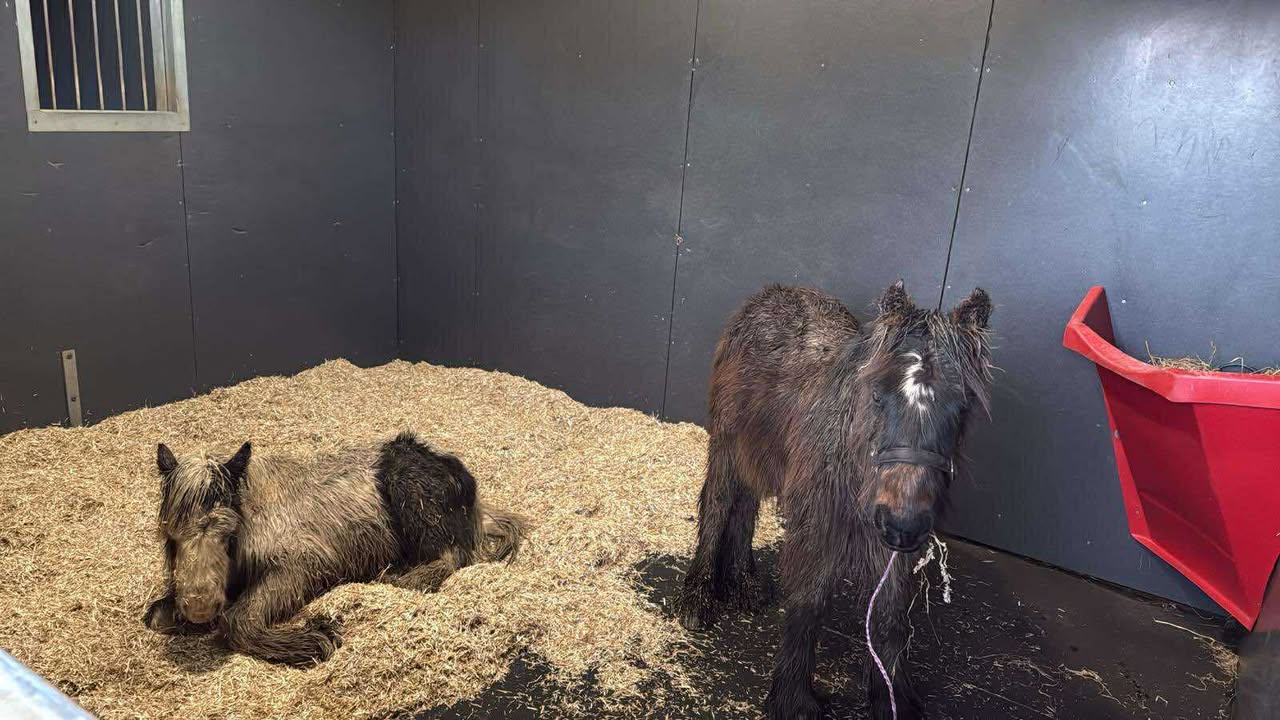
Alongside Ash’s urgent veterinary care, all four colts will require castration, microchipping and passporting before their rehabilitation journey can truly begin.
These essential procedures typically cost approximately £250 to £350 per foal, but more complicated castrations, such as rig operations, can cost around £1,000 each.
Woodfield is run with just two members of staff, caring for over 50 rescued horses and ponies, and everything we do relies entirely on public support.
These babies have already suffered more than any foal ever should. They were abandoned, traumatised, and one of them paid the ultimate price. We promised the remaining four a chance, and we are determined to keep that promise.
Sadly, this is not a one off.
Every year we are called to abandoned foals, dumped colts, sick stallions and unwanted horses. We step in when others walk away. We pick up the pieces of irresponsible breeding, lack of education, and a system that allows vulnerable animals to fall through the cracks.
Alongside rescue and rehabilitation, we work tirelessly to educate, raise awareness and campaign for change, because saving individual lives is only part of the solution. Until breeding is addressed and people understand the lifelong responsibility of owning a horse, stories like this will continue to repeat themselves.
If you are able to help, please consider donating via our JustGiving page. Your support will go directly towards Ash’s ongoing veterinary care and the essential costs needed to give all four boys the safe, healthy future they so greatly deserve.
Every donation matters.
Every share helps their story reach further.
Thank you, as always, for standing with us, and with Ash, Danny, Chris and Blue
RESCUES/ARRIVALS OF 2025
MR. PUGH
DECEMBER 2025


We received reports of an abandoned stallion in a truly sorry state. From the moment we arrived, it was clear that his most basic needs had not been met and that this had been a serious welfare case long before we became involved.
This poor boy was — and still is — suffering from laminitis, a painful and debilitating disease of the hoof, most commonly linked to hyperinsulinaemia, caused by excessive sugar intake from grass or inappropriate feed. This was not a sudden issue, but the result of long-term neglect.
Even more concerning, he had never had his feet trimmed — a fundamental requirement for all horses and ponies. While trimming frequency can vary depending on lifestyle, extreme overgrowth of this nature is a clear failure to meet basic needs and constitutes neglect. A farrier with 45 years’ experience told us he had “never seen such a young pony with laminitis” — a statement that underlined the seriousness of his condition.
An abandonment notice was issued, and thankfully no one came forward to claim him. This allowed us to escalate the case and legally remove him, bringing him fully into our ownership.
Now, this beautiful stallion finally gets what he deserves — a Woodfield second chance ❤️
When it came to naming him, we wanted to honour those who quietly support us behind the scenes. We are proud to introduce Mr Pugh, named in appreciation of Mrs Pugh, a long-standing supporter who has donated monthly directly to one of our feed suppliers for many years. Her generosity significantly reduces our feed costs and helps make rescues like this possible.
Since arriving at Woodfield, we have been able to take some important first steps, though his recovery will take time. Despite everything he has endured, Mr Pugh is beginning to settle. He has a gentle, slightly cheeky nature, but remains understandably nervous — as though he is still carrying the weight of his past.
For the first time, he feels safe enough to lie down on his deep bed, allowing him to take pressure off his painfully sore feet. Seeing him rest is a small but incredibly meaningful milestone. His bedding alone costs £80 — ten bales at £8 each — but ensuring his comfort is non-negotiable.
His feet have now been carefully trimmed, marking the beginning of ongoing, long-term management and rehabilitation.
Mr Pugh is now booked in for castration, microchipping, and passporting — essential steps that will secure his future and allow him to continue progressing safely at Woodfield. Once castrated, we hope he may eventually find a companion here, something every horse deserves.
As he is now officially booked in, Mr Pugh becomes the 10th Woodfield castration of 2025.
Mr Pugh’s story is a stark reminder of the realities sanctuaries face every day — but also of what is possible when intervention comes in time, and compassion is backed by action.
Welcome home, Mr Pugh. You are safe now.
5 SHELANDS/ FRED
NOVEMBER 2025

Five ponies found their worlds turned upside down when their owner was taken seriously ill, leaving them suddenly vulnerable and without a clear plan for their future. It quickly became apparent that the ponies needed urgent help, care, and in some cases veterinary attention — and that time was very much against them.
At that point, Woodfield was already caring for a high number of horses and ponies, many of whom were permanent residents whose past experiences meant they could never be rehomed. While we continued to rehabilitate and rehome those suitable for carefully selected companion-only homes, space was limited and decisions had to be made responsibly, with welfare at the forefront.
For ponies who were well enough to move on, Woodfield’s rehoming process was always carried out under strict lifetime contracts. These ensured that animals remained in our ownership, could never be sold on, and would always have a place to return to — day or night, should they ever need us again.
The hardest part of rescue is saying no.
But saying no to permanently taking on an animal does not mean turning away from their welfare.
This was a belief deeply held by our founder, Robbie Bartington. When faced with situations like this, there was always a solution rooted in what was best for the animals — even if it meant thinking beyond the obvious.
While with us, the ponies received full bellies, veterinary treatment, and thorough assessments, ensuring each one was fit and well enough to travel safely and comfortably to their next destination.
One of the group, an older Shetland gelding, was being badly bullied within the herd. He remained with us at Woodfield, where we named him Fred. Fred quickly found comfort and companionship alongside Riley and Popeye, settling into life safely and becoming a permanent resident here.
The remaining four ponies were carefully matched with trusted friends in Norfolk, who were able to offer them the long-term care and stability they needed. The final challenge was arranging safe and suitable transport, which was secured as promised.

You may have noticed another pony briefly featured during this rescue. This individual was part of a joint rescue between sanctuaries, and for security reasons their identity was protected.
In the end, all five ponies reached safety — four beginning their next chapter in Norfolk, and one finding a permanent home at Woodfield.
This outcome showed what could be achieved when sanctuaries worked together, even with limited resources. With cooperation, compassion, and support, the unachievable became achievable.
Five ponies were saved.
The worst was behind them.
And they were finally able to rest.
RILEY
OCTOBER 2025


Riley came to Woodfield earlier this year after being lovingly cared for by fellow Woodfield supporters who had taken him on in poor condition. From the very beginning, their dedication and commitment to improving his health were clear — and the progress they made with him truly shone through.
At the grand age of 32, Riley faces challenges that come with old age. With only a few teeth remaining, it is almost impossible for him to eat hay or haylage. Instead, Riley requires specialist, weight-gaining soaked feeds, given regularly throughout the day — often every few hours — to keep him nourished and thriving.
When our supporters reached out to us, one thing was made very clear: putting Riley to sleep was never an option. Despite his age, he is bright, full of life, and clearly willing to keep going. However, the level of one-to-one, time-intensive care Riley needs simply wasn’t something they could continue to provide alongside daily life.
They had done an incredible job. Riley arrived from a place of care, love, and genuine horsemanship — and their honesty and selflessness in asking for help speaks volumes.
Since arriving at Woodfield, Riley has settled in beautifully. He loves his feed and his grass, and his gentle nature and quiet determination have already captured our hearts.
Surrendering a horse or pony is never an easy decision. Time is precious — and when action is taken early, with love and honesty, it can make all the difference. Riley’s story is a powerful reminder that asking for help can be the very thing that gives an animal their second chance at life.
Welcome home, Riley.
LLOYD
AUGUST 2025


Lloyd came to Woodfield in a heartbreaking state. From the moment he arrived, it was clear that the odds were stacked against him — but that has never stopped us from giving a horse the chance they deserve.
He was severely underweight, weak, and vulnerable, carrying the physical and emotional weight of a life that had failed him repeatedly. His eyes told the story of a horse who had almost given up hope.
Lloyd was named in honour of our cherished long-term supporter, Adrian Lloyd.
Determined to understand what Lloyd’s body was fighting, we carried out every test available — blood tests, X-rays, biopsies, and specialist investigations — searching for answers that would allow us to give him the future he deserved. What became heartbreakingly clear was that past human failings had played a devastating role in his condition.
In his nine years of life, Lloyd had been moved from pillar to post, country to country — from the USA, to Ireland, to France, and finally to the UK. A lifetime of instability, deprivation, and neglect had left deep and lasting damage.
During the 76 days Lloyd was in our care, no expense was spared:
- Specialist feeds to support his fragile body
- Constant bedding to keep him comfortable
- The very best veterinary care, regardless of cost
- Endless hours of gentle, one-to-one TLC
Advanced testing confirmed that Lloyd was suffering from Equine Motor Neuron Disease (EMND) — a condition linked to long-term vitamin E deficiency, something horses should naturally receive from good grass and hay. This meant Lloyd’s body had been quietly struggling for a very long time, deprived of even the most basic equine needs.
Crucially, the results also confirmed that Lloyd did not have PSSM. With that ruled out, we were finally able to begin transitioning him onto a carefully managed, weight-gaining diet, something we had not been able to do safely before.
For a brief moment, it felt like we could finally move forward.
Around a week later, Lloyd became acutely lame. He was taken straight back to the vet for further investigation. Additional X-rays and tests revealed devastating news — Lloyd was suffering from laminitis.
Laminitis is a severely painful condition affecting the sensitive structures inside the hoof. It can cause intense pain and instability, particularly when it is chronic or recurrent. The X-rays showed that this was not a new episode — Lloyd had suffered laminitis in the past, and the damage within his feet indicated a long-standing condition that had returned.
This was not something that developed under our care. It was another consequence of years of neglect and mismanagement, compounding everything else his body was already fighting.
With advanced EMND, chronic laminitis, and a body already weakened beyond recovery, Lloyd’s prognosis became heartbreakingly clear. His pain could not be controlled in a way that would offer him a meaningful quality of life.
On welfare grounds, with Lloyd’s dignity and comfort at the forefront of every decision, we made the heartbreaking choice to say goodbye.
When his time came, Lloyd passed peacefully, with love and kindness, surrounded by people who fought for him and refused to let him suffer any further.
Although his time at Woodfield was far too short, it mattered.
He was never hungry again.
Never cold.
Never ignored.
Never passed on.
Lloyd’s story is a painful reminder of the consequences of neglect — but also of why sanctuaries like Woodfield must exist. Some horses cannot be saved, but every horse deserves a chance.
Lloyd received his Woodfield Chance.
HENRY
JULY 2025


Henry came to us under heartbreaking circumstances after being attacked by other stallions on local common land. As soon as we received the call, we jumped into action.
After carefully sedating him, we were able to secure Henry in a pen and transport him safely to our vets, where he remained for many days while his extensive wounds were treated.
His most serious injury was a deep wound to his leg, which had to be flushed in the operating theatre. During that time, we all held our breath, desperately hoping that infection had not reached his knee joint — an outcome that could have been devastating.
Thankfully, Henry pulled through.
Following his recovery, Henry was successfully castrated, removing the risk of further conflict and allowing him to begin a calmer, safer chapter of his life. Today, he enjoys peaceful evenings out in the field with his companion, Michael — a world away from the trauma he once endured.
Henry’s journey is yet another stark reminder of the ongoing crisis of indiscriminate breeding on common land in South Wales. When stallions are left entire and unmanaged, the consequences are often violent, traumatic, and entirely preventable.
Henry survived — but too many do not.
His story strengthens our resolve to keep intervening, campaigning, and standing up for horses who have no voice and nowhere else to turn.
MICHAEL
JUNE 2025


This grey stallion was discovered entangled in telephone wire on a Gower common, a terrifying and life-threatening situation for any horse — particularly one living wild. His rescue by Woodfield Animal Sanctuary was both urgent and highly complex.
The stallion was extremely distressed and dangerously trapped. With every movement, the wire tightened, risking catastrophic injury. Due to the location, his wild nature, and the severity of the entanglement, this was not a rescue that could be approached conventionally. our specialist emergency team was required, and the decision was made that chemical immobilisation was the only safe option — both for the stallion and for those trying to save him.
He was carefully darted, freed from the wire, and stretchered off the common, a dramatic and costly emergency operation that could not be delayed. Every second mattered. Following his rescue, he was brought into our care, where he was named Michael. He later underwent castration, a vital step not only for his long-term welfare but also to prevent further contribution to the ongoing cycle of indiscriminate breeding seen in south Wales.
Today, Michael’s story has a far brighter chapter.
Now recovering well, he has formed a close bond with another rescued stallion, Henry. The two are inseparable, spending warm summer evenings grazing peacefully together in our home fields — a scene that could not be further removed from the chaos and danger of Michael’s first days with us.
From a terrified, trapped wild stallion to a calm, content companion, Michael has truly captured all of our hearts — and his journey stands as a powerful reminder of why emergency rescue, specialist intervention, and long-term sanctuary care are so vital.
ABANDONED COLTS
JUNE 2025


On 2nd June 2025, we received a call-out concerning four young colts. Abandoned out of the county, their future was uncertain from the very beginning.
They had been dumped on a dangerous main road, prompting the Police to attend. For their immediate safety, the colts were herded into a nearby farmer’s field. Sadly, the following day, that same farmer ushered them back out onto the road, closing his gate behind them.
With the ponies once again at serious risk, a very kind local family with nearby land stepped in. Working alongside the Police, they agreed to take the colts onto their land temporarily, where they remained while an abandonment notice was served.
An abandonment notice gives the “owners” a set period of time to come forward and claim the animals. If no one does, ownership legally transfers to the landowner once that period expires.
As the abandonment period came to an end, the family were at their wits’ end. They simply could not keep the colts long term. They reached out to numerous sanctuaries and charities, desperately trying to find help — but no one was able to step in.
No owners came forward.
So we made the several-hour journey to collect them.
They were finally safe.
On 24th June 2025, we successfully castrated these young colts, continuing our ongoing fight against the growing crisis of indiscriminate and antisocial equine breeding in Wales.
This crisis leaves sanctuaries like Woodfield facing the cost of a monumental number of castrations every single year — a cost that is unavoidable if we are to reduce future suffering, prevent further abandonment, and stop the cycle repeating.
Alongside rescuing and castrating colts across Wales, we are committed not only to intervention, but also to education and campaigning. We work to raise awareness locally and worldwide about responsible equine ownership, breeding, and welfare.
This battle is ongoing.
And we continue it only with your support.
ORPHAN FOAL
MAY 2025


In May 2025, we received an urgent call about an orphan foal who needed help immediately. From the moment we saw her, we knew time was critical.
We took her straight to our vets, where she was diagnosed as what is commonly known as a “dummy foal”.
Dummy foal syndrome occurs when a foal struggles to transition properly after birth. These foals may appear quiet, confused, unable to suck, or unaware of how to feed — despite wanting to live. Without rapid intervention, their chances are very slim.
At the clinic, the vets performed a Madigan Squeeze — a controlled technique that can help “reset” a foal’s neurological state. Slowly, we began to see a change. She started to respond, and most importantly, she began to suck.
Because she was still too weak to feed properly on her own, she was stomach-tubed several times to ensure she received the nutrition she desperately needed. Once she was stable enough, we brought her home to Woodfield, where she was fed throughout the night, watched constantly, and kept warm and safe.
By the next morning, she was bright enough to spend a short time outside in the sunshine, enjoying fresh air. For a moment, it felt like we were turning a corner.
At that point, we made the decision to introduce her to one of our own rescue mares — a mare who had raised foals before. We discussed putting her on medication to encourage milk production, knowing that nothing replaces a mare’s milk, especially for a fragile foal.
They bonded immediately.
The mare accepted her without hesitation, showing gentleness and care — and for a brief, beautiful moment, it felt like this little foal had finally found her place.
But then we noticed a change.
The foal became increasingly lethargic, quieter than she should have been. Alarm bells rang instantly, and we rushed her straight back to the vets. By the time we arrived, she was heartbreakingly weak.
We tried everything.
But despite all efforts, her body was simply too tired.
On welfare grounds, with no quality of life ahead of her, we had to make the devastating decision to say goodbye to this little soul at the clinic.
One of the most heartbreaking realities with orphan foals is colostrum.
Colostrum is the first milk a mare produces in the hours after birth. It contains the antibodies a foal needs to build an immune system. Without it, a foal is left dangerously vulnerable to infection, weakness, and collapse — even if everything else seems to be going right.
If this foal had been found sooner, there may have been a stronger chance. That knowledge stays with you.
But what matters is this:
She was not ignored.
She was not left.
She was not allowed to suffer alone.
That little foal deserved her Woodfield chance — and that is exactly what she got.
She was loved, fought for, comforted, and protected until the very end.
Sometimes rescue doesn’t mean a happy ending.
Sometimes it means dignity, compassion, and doing everything humanly possible — even when the outcome breaks your heart.
Run free, little one. You mattered
JULIANNA
MAY 2025

In May 2024, we rescued Lola and her tiny foal, Lilly, from common land. They were living exposed to the elements, with no protection and no guarantee of survival.
That same week, heartbreak struck when two other foals on that land died from hypothermia and pneumonia. Their deaths made it painfully clear how dangerous those conditions were — and we knew we could not leave Lola and Lilly there to face the same risk.
At the time of rescue, there were no obvious signs that Lola was in foal again. When a mare is already feeding a foal at foot, it can be extremely difficult to tell if she is also in foal, as her body is already supporting lactation and change.
This is a reality we face often in rescue.
While the majority of horses and ponies we take in are colts, requiring castration to prevent further indiscriminate breeding, there is always a risk when rescuing mares that they may already be in foal — often unknowingly and through no fault of their own.
In May 2025, Lola gave birth to her second foal, Julianna, right here at the sanctuary. She must have been covered by a stallion shortly before her rescue, carrying Julianna quietly while caring for Lilly and surviving life on common land.
Against all odds, Lola carried her pregnancy safely to term under our care — supported by proper nutrition, monitoring, and protection — and Julianna was born warm, safe, and surrounded by care.
Lola’s story is a powerful reminder of the complex reality of rescue. Sometimes, when you save one life, you discover you were protecting two — or more.
From heartbreak to hope, Lola, Lilly, and Julianna represent exactly why Woodfield continues to step in when others cannot.
ROBBIE & BARTY
JANUARY 2025


Robbie and Barty were rescued in January 2025, becoming our first rescues since the passing of our founder, Robbie Bartington.
These two young colts were found dumped on a football pitch in Swansea, frightened, vulnerable, and at serious risk of euthanasia. It took several hours to safely pen the terrified foals, who had clearly been through a great deal before help arrived.
When they reached the sanctuary, it was immediately apparent just how unwell they were. Both foals were severely undernourished, but Robbie in particular was incredibly weak and frail. At that point, his future was deeply uncertain.
Slowly, with time, care, and patience, both boys began to settle. They have started to gain weight, build strength, and — most importantly — learn to trust humans again.
Sadly, Robbie and Barty’s story is far from unique.
A huge percentage of ponies rescued by Woodfield over the years have been abandoned, bred indiscriminately and dumped simply because they had the misfortune of being born colts. Time and time again, it is animal sanctuaries that are left picking up the pieces — providing safety, rehabilitation, long-term care, and secure futures for these unwanted youngsters.
This also means sanctuaries carrying the heavy financial burden that comes with responsible care, including castration and rig operations — costs that are unavoidable but absolutely essential to prevent further suffering and uncontrolled breeding.
Our founder, Robbie Bartington, was extremely vocal on this issue. Throughout her life, she worked tirelessly to address the crisis of indiscriminate breeding, seeing to the castration of hundreds of colts and working closely with local authorities to reduce the problem at its source.
In many ways, rescuing Robbie and Barty felt like continuing that mission where she left off.
Both boys have now been successfully castrated and are living life to the full. Seeing Robbie today — stronger, brighter, and full of character — is a powerful reminder of why this work matters so much. When he first arrived, we feared for his survival. Now, he is thriving.
Robbie and Barty are not just rescue cases — they are proof that second chances save lives, and that standing up for the forgotten ones truly makes a difference.